
Accessible VIP sports travel should build anticipation long before the opening whistle, not leave a guest uncertain about the next handoff. The difference is a plan that respects personal preferences and verifies the complete journey.
Ask Superior Executive Services to coordinate a tailored VIP sports travel experience.
Accessible VIP sports travel coordinates venue access, premium seating, lodging, transportation, and personal support around a guest’s stated preferences. A strong itinerary verifies every stage directly with the venue, hotel, and transportation provider, then documents arrangements and backup options before departure.
The goal is not to assume what a guest needs. It is to ask, listen, verify, and create a plan that gives the guest clear choices. The path begins with early, respectful planning.
Start accessible VIP sports travel planning early
Major sports weekends bring high demand for premium seats, nearby hotels, and private transportation. Accessible inventory may be limited or configured differently at each property and venue. Starting early creates more time to compare suitable options and resolve gaps before reservations become difficult to change. Review this guide to when to book VIP sports travel packages when setting the planning timeline.
Begin with the guest, not a standard checklist
Ask the traveler how they prefer to move through the trip and what makes an experience comfortable. Some guests may need step-free routes and wheelchair space. Others may walk short distances but need fewer stairs, a closer drop-off point, or time to rest. A companion seating request, service animal, sensory need, or medical device may also shape the itinerary.
Use respectful, practical questions. Ask what support the guest wants rather than asking for a diagnosis. Record exact preferences, including mobility-device dimensions when relevant, but share those details only with the providers that need them.
Build the journey in the right order
- Confirm the event, preferred experience, travel party, and access priorities.
- Check accessible seating and premium hospitality routes with the venue.
- Select a hotel that can verify the requested room features and common-area access.
- Arrange each transfer, including airport, hotel, venue, and optional dining trips.
- Document names, confirmation numbers, contact details, and backup options.
- Reconfirm the full itinerary shortly before travel.
Do not rely only on a booking-platform icon or general accessibility statement. Features, policies, and routes can change. Direct confirmation creates a stronger record and gives the guest better information for making decisions.
What should you ask the sports venue?
An accessible ticket is an important start, but it does not describe the entire event-day experience. The guest may also pass through parking, security, premium entrances, elevators, hospitality spaces, restrooms, and departure zones. Ask the venue about the full route.
Questions about seating and sightlines
- Where is the accessible seating located, and what does the sightline look like?
- How many companion seats can be placed with or near the accessible space?
- Can the seating accommodate the guest’s mobility device without a transfer?
- If a guest can transfer, where can the mobility device be safely stored?
- What is the process if access needs or party size changes before the event?
Confirm the exact ticket type and seating arrangement in writing when possible. Do not assume that a premium ticket, suite pass, or hospitality package includes an accessible seat in the same area.
Questions about arrival and movement
- Which entrance offers the most suitable step-free route?
- Where can an accessible vehicle drop off and pick up passengers?
- What distance is involved between drop-off, security, seating, and hospitality?
- Are elevators available along the planned route, and are there event-day restrictions?
- Where are accessible restrooms relative to the seat and lounge?
- Who should be contacted on event day if an agreed route is unavailable?
Guests with service animals, medical supplies, battery-powered mobility devices, or sensory needs may have additional questions. Ask the venue about its current policies and screening procedures. A planner should relay those answers accurately, not interpret them as a guarantee. For premium-space tradeoffs, compare a private suite with a VIP hospitality club before choosing a package.
Verify the hotel beyond the room description
A hotel’s accessible-room label can cover many different layouts. The right room depends on the guest’s preferences, mobility device, and desired level of independence. Contact the property directly and request clear answers about the features that matter.

| Area | Request | Verify directly |
|---|---|---|
| Guest room | Accessible room category | Door width, bed height, clear floor space, and room location |
| Bathroom | Roll-in shower or accessible tub | Exact setup, grab bars, shower seat, and sink clearance |
| Building route | Step-free access | Route from vehicle drop-off to lobby, room, dining, and amenities |
| Support items | Requested equipment | Availability, reservation status, and who will confirm placement |
Confirm the details that affect comfort
Ask whether the room is assigned or only noted as a request. Confirm whether the guest can reach the room, restaurants, meeting spaces, and other planned amenities without unexpected barriers. If the guest uses a large mobility device, provide its dimensions and ask whether doors, elevators, and turning spaces are suitable.
Location matters too. A room near an elevator may reduce travel distance, but elevator noise may be unwelcome. A lower floor may appeal to one guest and not another. Present the tradeoffs, then let the guest choose.
Keep a backup in view
Even a carefully documented booking can encounter a maintenance issue or last-minute room change. Note who is authorized to solve problems at the property and identify a reasonable backup option. The purpose is not to expect failure. It is to make sure one problem does not derail the entire sports weekend.
Plan every transfer as part of the experience
Transportation is where otherwise strong itineraries often break down. A route may involve an airport pickup, hotel transfer, venue arrival, dinner reservation, and return trip. Each segment should match the guest’s needs and connect cleanly to the next.
Share the right vehicle details
If a guest will remain in a wheelchair during travel, ask the provider about the vehicle’s lift or ramp, interior clearance, securement system, and passenger capacity. If a device will be folded or stored, confirm its dimensions, weight, and handling instructions. Also account for luggage, companions, and any support equipment.
Ask the provider to confirm what it can accommodate. Avoid using broad terms such as “wheelchair friendly” without details. A vehicle suitable for one mobility device may not suit another.
Map the handoffs
The best vehicle plan can still fail if the drop-off point is far from the accessible entrance. Match the driver’s instructions to the venue’s current access guidance. Note the correct gate, street, staging area, and event-day contact. Build in reasonable time for loading, security, crowds, and elevator use without making the guest feel rushed.
Departure deserves equal attention. Rideshare zones and road closures can change after an event. Confirm where the vehicle will wait, how the driver and guest will connect, and what happens if traffic forces a change. Keep an alternate provider or route on file when possible. A comparison of executive car service and rideshare can clarify the operational tradeoffs.
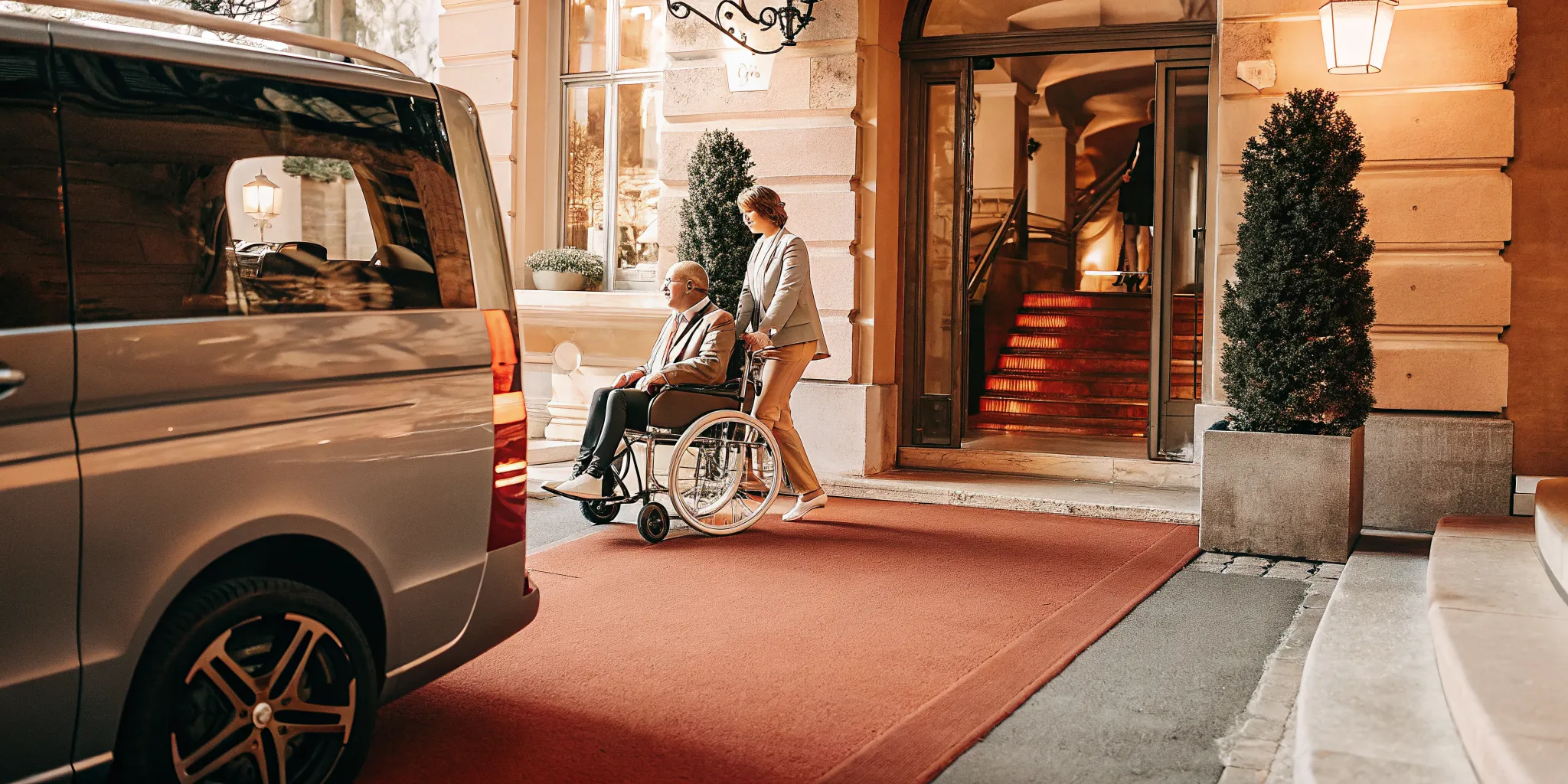
Contact Superior Executive Services to discuss the details of your event itinerary.
Does VIP hospitality include accessible options?
VIP can describe excellent seats, a private suite, a hospitality lounge, premium food service, or a special entrance. It does not automatically describe an accessible route. Treat every premium feature as a separate part of the access plan.
Follow the full premium route
Ask whether the guest can move from the accessible entrance to the assigned seat and every included hospitality space. Verify doorways, elevators, restrooms, seating layouts, and viewing areas. A suite may be reachable while its tiered seating area is not suitable. A lounge may offer step-free entry but have high-top tables only. Specific questions reveal these differences before arrival.
Protect choice and dignity
The guest should not have to trade away the core VIP experience because a detail was overlooked. If an element is not suitable, ask the venue what alternatives it can offer and share those choices clearly. Do not decide for the guest or describe an alternative as equivalent without their input.
Companions also matter. Confirm whether the party can remain together in seating and hospitality spaces. If a venue limits companion seating, explain the policy and explore available options early.
How concierge coordination reduces travel friction
Accessible sports travel involves many organizations, and each one controls only part of the experience. A concierge brings the answers into one working itinerary. That reduces the number of times the guest must repeat preferences and makes it easier to spot a missing connection.
Create one clear source of truth
A useful trip record includes ticket details, access requests, hotel features, vehicle specifications, provider contacts, confirmation numbers, and backup plans. It should distinguish confirmed arrangements from open requests. This helps everyone understand what is settled and what still needs attention. An executive assistant event planning checklist can help a travel party organize key decisions and handoffs.
Superior Executive Services offers concierge travel services that can help coordinate the moving parts of a tailored trip. The concierge role is to ask focused questions, follow up, and keep the itinerary aligned with the guest’s preferences. Final accessibility confirmation should always come from the venue, hotel, or transportation provider responsible for that feature.
Reconfirm without burdening the guest
Policies, operating hours, vehicle assignments, and event routes may change. A concierge can reconfirm key details with providers and give the guest a concise update. If something has changed, the planner can present alternatives while there is still time to act.
This coordination also improves the travel party’s confidence. Companions know where to go and who to contact. Drivers have accurate instructions. The guest can focus more on the event and less on managing separate vendors.
What should you reconfirm before event day?
A final review turns a collection of bookings into an operating plan. Complete it close enough to travel that the information is current, but early enough to address a change. Use the same disciplined approach described in this corporate hospitality risk planning guide.
Use a practical final check
- Confirm ticket delivery, accessible seating, companion arrangements, and hospitality access.
- Verify the venue entrance, drop-off point, security policy, restroom route, and event-day contact.
- Reconfirm the hotel’s room category, requested features, arrival time, and on-duty contact.
- Check each vehicle, pickup time, driver instructions, mobility-device details, and backup plan.
- Pack tickets, identification, medication, device chargers, and useful contact numbers.
- Share a simple itinerary with the guest and companions in their preferred format.
Leave room for the guest to change a preference. Accessibility planning should support independence, not create a rigid schedule. Make clear who can approve changes and how the group will communicate during the trip.
Frequently asked questions about accessible VIP sports travel
How far ahead should I plan accessible VIP sports travel?
Begin as early as practical, especially for a high-demand event. Early planning gives you more time to compare seating, lodging, transport, and hospitality options. Availability varies, so confirm current details directly instead of relying on a universal deadline.
Does an accessible ticket include companion seating?
Companion-seating policies vary by venue and event. Ask how many companions can sit with or near the accessible space, whether their tickets must be purchased together, and what happens if the travel party changes.
Can a concierge guarantee that every part of the trip is accessible?
No planner should make an unverified guarantee on behalf of a venue, hotel, or transportation company. A concierge can document needs, ask detailed questions, coordinate answers, and reconfirm arrangements with the responsible providers.
What information should I share about a mobility device?
When relevant, share the device type, dimensions, weight, whether it folds, and whether the guest will transfer to a vehicle seat. Provide only the details a provider needs to confirm a suitable route, room, or vehicle.
Plan a sports weekend around the guest
Thoughtful access planning protects the excitement of a premium sports trip. Bring the venue, hotel, transportation, and hospitality details into one tailored itinerary, then verify each promise with the responsible provider.
Start planning a tailored VIP sports travel experience with Superior Executive Services.