Choosing rugby world cup hospitality packages is about more than a seat. For a corporate host, the right plan has to fit the match, guest list, travel schedule, and level of hosting your group expects. Start by separating confirmed event details from the experience you hope to arrange, then compare each option against the same checklist.
Request help planning your rugby experience
What should rugby hospitality help you decide?
A premium event plan should make several decisions easier: which match to attend, what kind of access matters to your guests, how much time to build around the match, and who will coordinate the moving parts. Do not assume that a hospitality label means the same thing across events or providers. Ask for the precise description of the proposed package, in writing.
For a business group, begin with the purpose of the invitation. Is the goal to thank a long-standing client, bring prospects together, recognize employees, or create time for senior leaders to connect? A match-day plan designed for relationship-building may need a quieter place to talk and a relaxed arrival window. A group of dedicated fans may care most about the view, atmosphere, and staying close to the action.
- Define the guest group: Confirm headcount, guest roles, accessibility needs, dietary needs, and any schedule constraints.
- Choose the desired experience: Decide whether the priority is premium seating, a hosted environment, easy logistics, or time together beyond the match.
- Set practical boundaries: Agree on travel dates, budget range, room preferences, and how much customization is useful.
- Name a decision owner: Choose one person to consolidate questions and approve changes so details do not fragment across the group.
Use the event portfolio to see the range of sporting experiences a provider coordinates, but treat an event listing as a starting point rather than confirmation of a specific tournament inventory. Superior Executive Services provides event experiences and corporate event hospitality planning.
Which tournament details must you verify first?
Rugby World Cup planning is date-sensitive. Before committing to flights, accommodation, or a guest invitation, confirm the relevant tournament cycle, the host country and cities, match venues, match dates, and the sales channel for hospitality. Do not carry dates or venue assumptions forward from a previous edition. The next edition’s details may differ, and a general tournament announcement does not confirm a particular package’s availability.
Ask for a written itinerary or event outline showing the match date and venue tied to the proposal. Confirm whether the proposed experience is for one match or multiple matches, whether the seating location is specified, and whether the listed hospitality is official tournament hospitality or a separately arranged premium experience. Use the provider’s exact terminology and request clarification where descriptions are broad.
| Decision area | What to establish | Why it matters |
|---|---|---|
| Tournament cycle | Edition, match date, venue, and host city | Protects travel plans from outdated or assumed information |
| Access | Ticket or admission status, seating category, and any named hospitality access | Shows what is actually included rather than implied by a package label |
| Group plan | Guest count, allocation, and whether the group can sit or host together | Helps avoid an experience that does not work for the invitation list |
| Travel | Accommodation dates, transfers, and arrival/departure timing | Reveals gaps between the match schedule and the trip plan |
| Terms | Price basis, payment schedule, cancellation rules, and what remains unconfirmed | Allows a fair comparison and informed approval |
Hospitality plans are also shaped by uncertainty outside the match itself. Research published in a peer-reviewed journal examined how crises and disasters affected the hospitality industry, a reminder that travel and service conditions can change. It does not forecast any particular tournament or package, so use it only as general context and verify current terms directly. See the study on effects of the COVID-19 pandemic on the hospitality industry.
The available information here does not establish current Rugby World Cup dates, host cities, or official hospitality inventory. This guide therefore does not state an edition, host, venue list, or availability as fact. Have a provider verify those details against current event information before publication or purchase.
How should you compare hospitality options?
Compare like with like. A low headline price may omit lodging, transport, meals, or important timing details. A more comprehensive proposal may combine several elements, but those elements should still be itemized and defined. Ask what is included, what is optional, and what is not part of the offer.
Use a simple side-by-side review rather than relying on package names. In particular, establish whether any premium access is named and confirmed, what the seating description means, and where the group can spend time together. Do not treat a photograph or a broad phrase such as “VIP experience” as proof of a specific benefit.
- Match access: Is admission included? What match and seating category are proposed? Are locations assigned or still pending?
- Hospitality setting: Is a lounge, suite, meal, or hosted area explicitly included? Ask about opening and closing times and access conditions.
- Group configuration: Can guests gather in one place? Are there minimums or separate allocations?
- Trip components: Are hotels, transfers, and local coordination included, available as add-ons, or left for the host to arrange?
- Service responsibilities: Who is the point of contact before travel, and what assistance is available during the trip?
For a corporate group, consider the pace of the event day. An experience with a tight arrival window may not suit guests arriving from different cities. A hosted space may be valuable if introductions and conversation are part of the objective. If the match itself is the main draw, prioritize clear seating information and a realistic plan for reaching the venue.
One practical way to compare proposals is to score each against a short list of must-haves and preferences. Give each item a status: confirmed, proposed, optional, or unanswered. A plan that has a lower quote but several unanswered essentials is not yet directly comparable to one with those essentials documented. Ask the provider to fill gaps before circulating the options for approval.
For example, a four-person client group may need a particular match and a shared setting for conversation. An employee incentive group of twenty may instead prioritize allocation, reliable arrival coordination, and a single itinerary that everyone can follow. The same package name does not establish that either configuration is possible. Make the group size and purpose explicit, then ask for the relevant evidence in the proposal.
What travel logistics shape the experience?
International tournaments can bring multiple host cities and a busy match calendar. The specific geography depends on the edition, so design travel only after confirming the venues and dates relevant to your event. If the group plans to attend more than one match, compare the travel time between cities with the recovery time and hotel changes that guests can reasonably manage.
Build the trip around more than kickoff. Identify when guests need to arrive, where they will meet, how they will reach the venue, and what happens after the match. Allow room for traffic, transit queues, venue entry, and a delayed departure. When attendees are flying in, compare an arrival the day before with same-day arrival; the choice depends on flight schedules, group tolerance for risk, and the importance of arriving together.
- Lock the event facts. Confirm the match date, venue, and city for the exact experience under consideration.
- Map each guest’s journey. Gather origin city, arrival time, departure time, and any mobility or scheduling requirements.
- Choose a suitable base. Compare lodging location against the venue, group activities, and airport or station connections.
- Set transfer expectations. Determine whether transfers are proposed, who arranges them, and what the contingency is if timings change.
- Share one clear itinerary. Provide the group with meeting points, contact details, timing, dress guidance if applicable, and the latest confirmed information.
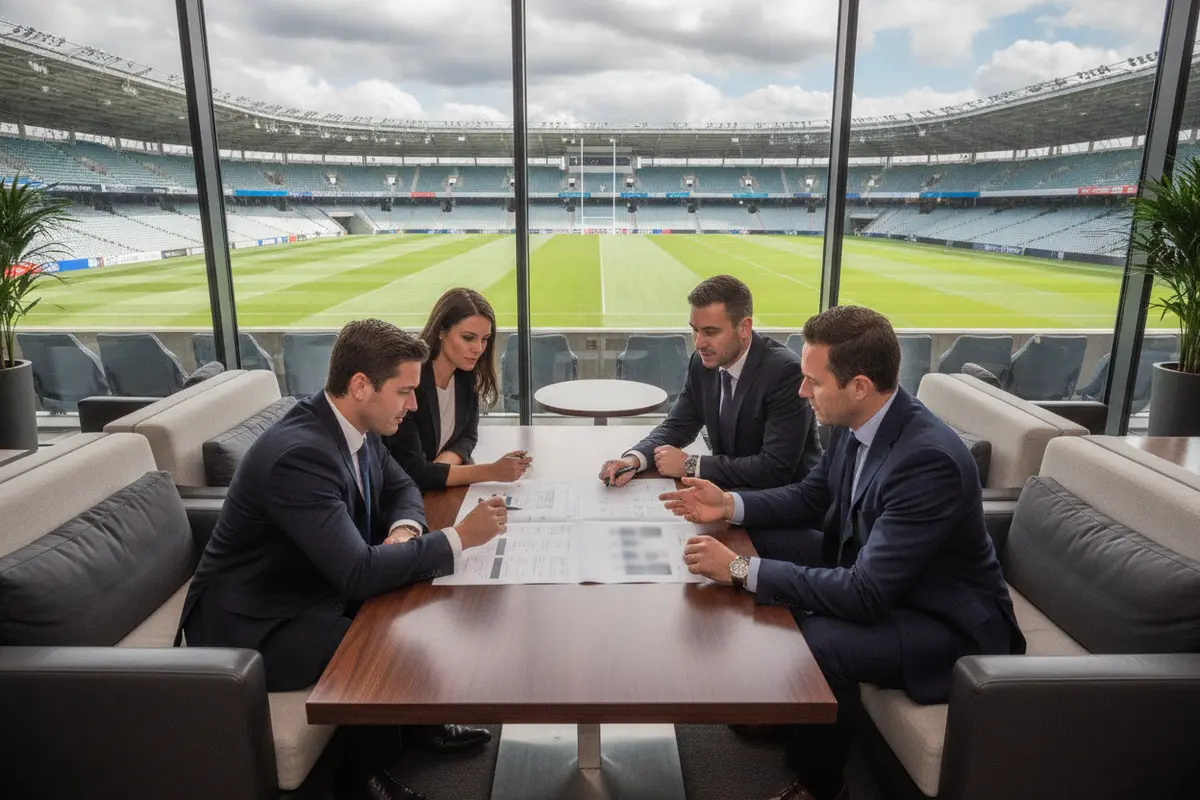
For a broader look at tailored sports travel, review sports travel package planning. If your group is considering another major event, the Formula 1 travel experience page illustrates how event-specific planning can differ by venue and format; it is not evidence of rugby package inclusions.
For a group crossing time zones or traveling from different home cities, assign a coordinator to collect arrival details in one place. Keep a working itinerary that distinguishes confirmed bookings from options under consideration. Include local meeting points in plain terms rather than relying only on an address; a venue entrance, hotel lobby, or named reception point is easier for guests to recognize. Once timings change, send a single update to everyone rather than allowing separate versions to circulate.
Think through the end of the event as carefully as arrival. Guests may leave at different times, wish to continue conversations, or need to reach separate hotels. Ask which parts of any transfer plan are shared and which are individual. If transportation is not included, give guests enough information to make their own arrangements and identify a backup contact if the group becomes separated.
What should a corporate host prepare for guests?
Good hosting starts before the invitation is sent. Be clear about what is confirmed and what is still being explored. Avoid promising a particular seating location, accommodation, or hospitality feature until it appears in the written proposal. This keeps expectations aligned and gives guests useful information without overstating the plan.
Once the plan is confirmed, send a concise guest brief. Include the confirmed event details, travel dates, accommodation arrangements, meeting point, appropriate contact information, and any decisions guests need to make. Make space for practical needs early, rather than discovering them shortly before departure.
- Ask guests to confirm names exactly as required for travel or event records.
- Collect dietary and accessibility requirements privately and in good time.
- Explain which costs are covered by the host and which are not, if relevant.
- Tell guests when the itinerary is final and how updates will be shared.
- Keep an alternative contact method available in case the group separates.
For teams hosting clients, the invitation should match the actual experience. Describe the event and the purpose of the gathering; do not imply access or benefits that have not been confirmed. If the trip includes time for meetings or conversation, build that into the schedule rather than expecting it to happen around a rushed match-day transfer.
Consider the different information guests may need. A first-time attendee may appreciate a brief explanation of the match-day schedule and expected arrival time. A frequent traveler may want only the confirmed logistics and a contact for changes. Keep the essential details near the top of the message, and separate optional recommendations from arrangements covered by the host. This reduces repeated questions and helps guests prepare without implying that optional items are part of the package.
How can you request a useful proposal?
A focused request helps a provider respond to your real priorities. Share the target tournament edition if known, preferred matches or dates, expected group size, home cities, travel window, lodging preferences, and the experience elements that matter most. If dates or match choices are flexible, say so. Distinguish firm requirements from preferences.
Ask for a written breakdown that identifies confirmed details, pending details, exclusions, payment terms, and applicable change or cancellation conditions. If a proposal uses terms such as “premium,” “VIP,” or “hospitality,” ask what each term means in that specific offer. Request an explanation of what would change if your group size or preferred match changes.
Review the proposal against your original priorities. Check whether the plan makes sense for every guest, whether the logistics connect, and whether the host can explain the experience accurately. A complete plan should make uncertainties visible, not hide them behind a polished label.
Superior Executive Services coordinates premium experiences for sporting events and entertainment. To discuss your group’s goals and the details that need verification, use the contact page or explore available event experiences.
There are several additional points worth clarifying before a decision. Ask how long a proposal remains valid and whether any quoted element can change before confirmation. A clear answer helps the organizer distinguish a planning estimate from a confirmed commitment. If one component depends on another, such as travel dates tied to a match assignment, ask which decision must come first.
For groups with varied priorities, identify a minimum acceptable experience and a preferred experience. For example, admission to a specific match may be essential, while a particular meal arrangement may be optional. This gives the provider room to suggest alternatives without losing sight of the reason for the trip. It also makes internal approval easier because decision-makers can see which trade-offs are acceptable.
Before authorizing payment, confirm the responsible contracting party and the precise terms that apply to the elements in the proposal. Keep a copy of the itinerary, payment details, and agreed inclusions in one place. If any details change, ask for a revised written version so the group is working from the same information. These simple records reduce confusion across a multi-person planning process.
To make a request efficient, prepare a short brief before contacting a provider. State the decision deadline, the likely number of guests, the purpose of hosting, and the flexibility on dates or match selection. Attach a list of accessibility or dietary requirements only through an appropriate private channel. Ask for the answer in a format your decision-makers can review: each component, its status, its terms, and the next step needed to confirm it. That structure makes it easier to compare revisions as plans evolve.
When several people approve the trip, agree on who can make final decisions about changes and who should receive updates. A late change to guest count, travel dates, or match preference can affect more than one element. Ask the provider to explain the consequences before approving a substitution. Keep the latest proposal clearly labeled with its date so an older version does not get mistaken for the current plan.
Request a conversation about your group plans
Frequently asked questions about rugby world cup hospitality packages
Are match tickets always included in hospitality packages?
Not necessarily. Confirm whether admission is included, which match it covers, and the seating category. The written offer should say what is included rather than relying on the package name.
Can a group attend multiple matches on one trip?
That depends on the relevant tournament schedule, available access, and travel between venues. Confirm match dates and locations first, then check whether the transfers and lodging plan leave enough time between events.
What should we ask about official hospitality?
Ask the provider to specify whether the proposed access is official tournament hospitality or another premium arrangement. Request the exact inclusions, access conditions, and any details that remain pending, and verify them for the relevant edition.
How early should we plan?
Begin once your group has a clear event objective and likely travel window, but do not commit to date-bound travel until match dates and venues are confirmed. Early planning gives you time to gather guest requirements and compare proposals without treating availability as guaranteed.
A strong rugby trip is built on confirmed event facts, a realistic travel plan, and an experience matched to the people you are hosting. Verify each inclusion in writing, communicate clearly with guests, and keep the itinerary focused on what your group values most.