
Group golf trips work when the format matches the people, not when the course looks famous on its own. A client weekend, a partner outing, and a friends trip can all use the same phrase, yet they need different lodging, tee times, and hospitality. This guide compares three formats a host can actually book: a tournament weekend, a resort stay-and-play, and a private-course trip. It also shows what to confirm before you ask for a proposal.
Call (608) 666-9070 to plan a group golf trip
What should group golf trips actually decide?
Start with the reason the group is traveling, because that reason sets the schedule. If the goal is client time, the plan should leave a real gap for conversation between rounds. If the goal is a once-a-year course, that famous round can lead and the rest of the plan can support it. If the goal is a team reward, the trip should still feel fair to players of different ability.
The next decision is the format. Tournament travel puts the group inside a major event, with tickets, housing, and transfers planned around competition days. A resort stay-and-play puts everyone on one property for several rounds. A private-course trip uses a club or estate where the group can hold the course and the dinner table. Superior Executive Services plans luxury travel, access, and hospitality for groups. It does not provide licensed security or protective services.
Write those choices down before anyone starts comparing package names. A useful brief names the host, the guest count, the dates that can still move, and whether golf is the main event or only one part of a larger gathering. That brief keeps a tournament quote from being judged against a resort quote as if they were the same product.
Which group golf trip format fits the occasion?
Use the table as a first sort. It does not rank one format above the others. It shows which question each format answers, and which page on this site goes deeper once you have chosen.
| Format | Best when | Main planning pressure | Where to go next |
|---|---|---|---|
| Tournament weekend. | Guests want a named event and shared hospitality. | Tickets, housing, and transfers sell on the event calendar. | Golf experiences. |
| Resort stay-and-play. | The group wants several rounds and one home base. | Tee sheets, room blocks, and dinner space must line up. | Pebble Beach golf packages. |
| Private-course trip. | The host wants the course and the table held for the group. | Guest rules, club access, and staffing need written terms. | Private golf retreat planning. |
Tournament weekends
A tournament weekend is the right group golf trip when the event itself is the reason to travel. Guests remember Augusta, Ponte Vedra, or a team competition more than they remember a generic resort. The tradeoff is control. Play, hospitality, and housing follow the competition schedule, so a host cannot simply move a round because a meeting ran long.
The live golf experiences page is the catalog for that choice. It covers premium travel to the Masters, The Players Championship, the PGA Championship, and custom retreats. Read it for the event menu. Do not treat it as the comparison of how a group should travel.
Resort stay-and-play
A resort trip fits when the group wants more than one round and a single place to sleep, eat, and meet. Monterey is the clearest example in this portfolio. Pebble Beach Resorts states that a minimum two-night stay is required to secure a round at Pebble Beach Golf Links, unless a date says otherwise, and that tee times are reserved by phone. That rule is why a famous public course can still behave like a package.
Our Pebble Beach golf packages guide covers access and hospitality for that destination. Use this article to decide whether a resort rotation is the right format before you study one coastline.
Private-course trips
A private trip fits when the host wants the group together without a public tee sheet. The course, the cottages, and the dinner can all sit inside one plan. That privacy comes with guest rules. Many clubs limit how often a non-member can play, require a sponsor, and release unnamed spots before the round. Ask for those rules in writing before you promise the date to guests.
If you already know you want a multi-day private retreat, use the private golf retreat guide for the build steps. This page stops at the choice. It does not repeat that process.
Talk through the format before you invite guests
How many players can one group golf trip hold?
Count the players before you count the other guests. A foursome is the unit most tee sheets actually understand. Eight players become two groups, twelve become three, and sixteen become four. Twenty players can still feel like one trip when the lodging and the dinner stay together, but the tee sheet will not treat them as a single start.
Mixed ability is the usual surprise. A low-handicap guest and a once-a-year player can share a table and still need different tees. The USGA explains Course Handicap as the strokes a player receives on a specific course, using the Handicap Index, slope, course rating, and par. Ask guests for an index early if you plan net games. Do not invent pairings from job titles.
Also separate players from non-players. A spouse, a speaker, or a client who does not golf still needs a room, a transfer, and something to do during a five-hour round. If more than a quarter of the party will not play, say so in the first inquiry. Otherwise the quote will buy too much golf and too little hospitality.
Where should the group stay, eat, and meet?
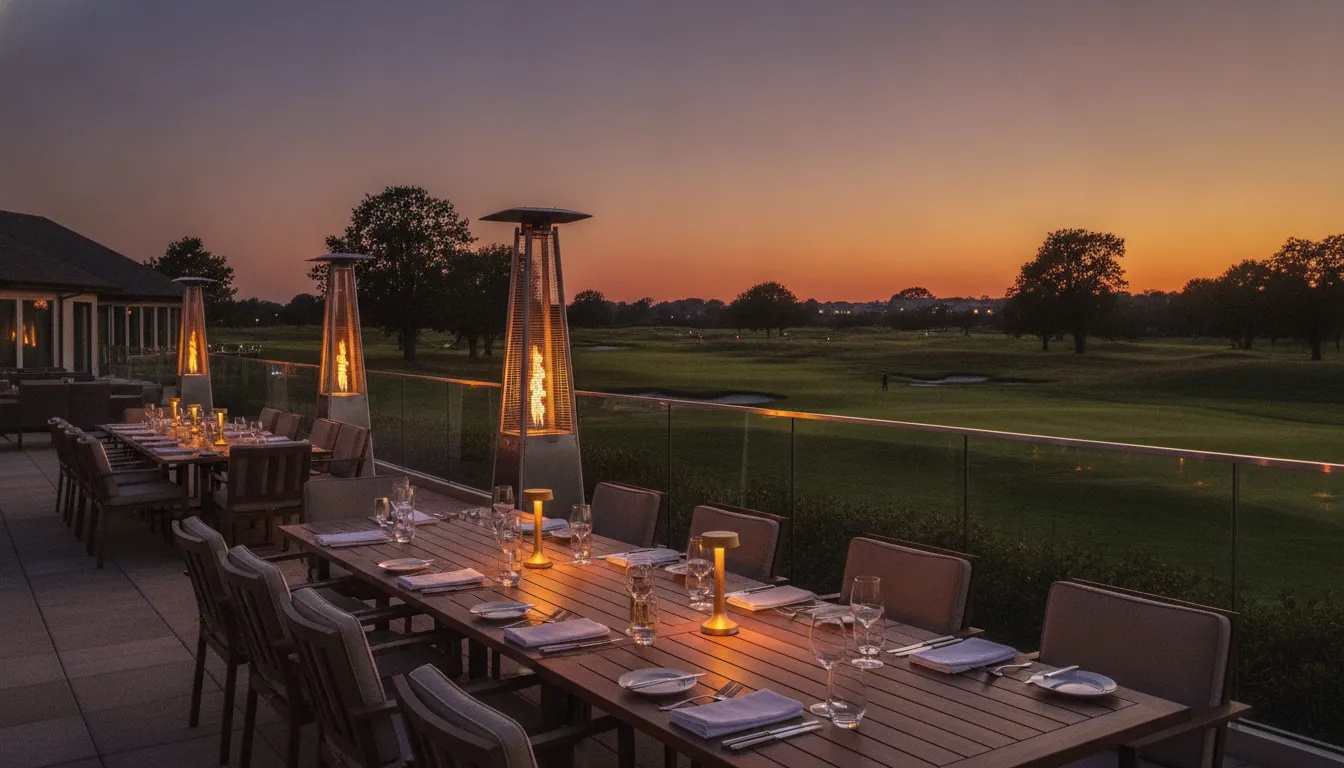
Lodging decides whether the trip still feels like one event after the round. The practical test is whether everyone can reach dinner without a separate car plan. Cottages and adjoining rooms usually do that more reliably than a downtown hotel scattered across several floors. A resort with golf, rooms, and a pub on one property solves the same problem in a different way.
Ask for a room map, not just a room count. Hosts need a room that can hold a welcome drink. Players who share a wall need a say in that pairing. A late arrival needs a key plan that does not depend on the host standing in the lobby. If the property cannot hold the full group, ask whether a second property is within a short ride, and who coordinates that ride.
Meal space matters as much as the bed. A group that splits between three restaurants after golf stops being one group. Confirm a private or semi-private table for the arrival night and the final night before you announce the trip. Special meals, quiet rooms, and early departures belong in the same note.
How do you lock tee times without losing the group?
Tee times fail in predictable ways. The sheet cannot start twelve players together. A public course releases times one by one. A private club requires member names. A resort ties the round to a hotel stay. None of those facts is a reason to skip the trip. Each one is a reason to book the sheet before you book the flights.
For a public or resort course, ask how many consecutive groups you can hold and how long a TBD name can stay on the sheet. For a private club, ask who may invite a guest, how many guests one member may host, and when unnamed spots drop. Put the answers next to your player list. If the club can hold only two foursomes, a sixteen-player plan needs a second course or a split day.
Build one sequence and stick to it:
- Fix the player count, the non-player count, and the dates that can move.
- Choose tournament, resort, or private-course format.
- Hold consecutive tee times, or the event access that replaces them.
- Place rooms and the shared dinner inside the same window.
- Only then send guest invitations and travel details.
That order keeps a host from inviting twenty people to a course that can start eight. It also keeps a tournament weekend from being planned like a resort. Event days do not move because a tee sheet looks open.
What should a host compare before asking for a proposal?
Compare the jobs, not the adjectives. Two quotes can both say luxury and still buy different things. One may include event access, a house, and transfers. Another may include rooms and a tee time, with hospitality priced separately. A third may be a private buyout with staffing the host has to approve.
Use a short scorecard with the planner:
- Who is invited, and who is actually playing?
- Which dates can move by a week without hurting the guest list?
- Does the group need one famous round, several rounds, or a private course?
- Must everyone sleep and dine on the same property?
- Who owns guest communication after the proposal is accepted?
Bring the wider travel questions to the corporate group travel guide if golf is only one piece of a multi-event program. Bring event-specific hospitality questions to the tournament page that matches the guest list. Keep this comparison focused on the golf trip itself.
Superior Executive Services builds proposals from the brief you send. Public pages do not list one group-golf price, because housing, access, and group size change the plan. A clear brief gets a useful quote. A request that only says “a nice golf trip” gets a menu.
What belongs in the first inquiry?
Send the facts a planner cannot guess. The first note should be short enough to answer in one sitting, and specific enough that the reply can name a format.
- Host company or household, and the person who can approve the plan.
- Preferred month, plus any dates that are fixed by a board meeting or event.
- Player count, non-player count, and any mobility or meal needs.
- Format preference: tournament, resort, private course, or a request for a recommendation.
- Lodging preference: one house, adjoining rooms, or a resort.
- Whether you need help with guest notes after the plan is set.
You do not need a final guest list to start. You do need an honest range. Eight and eighteen are different trips, even at the same resort. If skill levels vary widely, say that too. A planner can then protect a shorter-course option or a second tee for players who want a faster round.
Phone is the better path when the date is close. Call (608) 666-9070, or use the contact form if you would rather write the brief first. The same team reads both. Do not send account numbers, guest medical details, or internal budget files through a public form.
Call (608) 666-9070 to discuss your group size and dates
Frequently asked questions
How far ahead should a host ask about group golf trips?
Ask as soon as the month and the headcount are real. Tournament access and resort tee sheets move early, and a private club may only hold unnamed guests for a short time. A range is enough to start. Waiting for every guest to reply usually means the best lodging is gone.
Can one trip mix good players and occasional players?
Yes, if the plan says so. Different tees, a short course, or a second activity during the long round can keep the group together at dinner. Ask for handicap indexes before you set net games. The course, not the job title, should decide the pairing.
Is a group golf trip the same as a corporate golf outing?
No. A local outing is often one afternoon, a shotgun start, and a banquet. A group golf trip is an overnight plan with lodging, more than one gathering, and a tee sheet or event calendar that has to be held in advance. The retreat guide covers the private multi-day build. This guide helps you choose the format.
Do we have to pick the course before we inquire?
No. Name the occasion, the group size, and any destination you want to avoid or include. A planner can then say whether a tournament weekend, a resort, or a private course fits. Picking a famous course first often locks the group into rules, such as a minimum stay, that nobody has discussed.
What will the first reply usually clarify?
Expect a format recommendation, a question about dates that can move, and a list of what the proposal will and will not include. It should not invent a per-person price before housing and access are known. If a reply skips group size or non-players, send those facts again before you compare options.