For a corporate group attending a major sporting or entertainment event, the hardest part is rarely choosing the destination. It is aligning every moving piece so guests can travel comfortably, arrive prepared, and stay focused on the experience and the relationships around it.
Schedule event logistics services for your premium event travel program
Event logistics services bring travel, accommodations, event access, hospitality, transportation, and guest support into one coordinated plan. Exact inclusions are shaped by the event, group size, destination, tier, and selected services.
That coordination may begin months in advance, especially when a program requires premium availability or a customized itinerary. It can extend from arranging hotels, transfers, credentials, tickets, and hospitality access to supporting guests on site and capturing preferences for the next experience. The right scope depends on what your group needs, not on a universal package.
What Are Event Logistics Services?
Event logistics services coordinate the practical details that help a group travel to, arrive at, and enjoy an important event with less friction. For corporate planners, that may mean aligning accommodations, event access, transportation, hospitality, guest schedules, and on-site support around one shared experience. Instead of asking an internal team to manage each reservation, credential, transfer, and timing detail separately, a logistics partner helps connect those moving parts into a workable plan.
In a premium event setting, the work is often less about moving equipment and more about managing the guest journey. A corporate group attending a major sporting event, music festival, or entertainment experience may need lodging that fits the itinerary. Ground transportation between key locations, access credentials or tickets, and hospitality arrangements that support client conversations or team connection. Superior Executive Services coordinates these elements as part of broader luxury travel and hospitality experiences, with the specific scope shaped by the event and the selected package.
What event logistics may include
Depending on the destination, group size, event, and service tier, coordination may include the following:
Review each item with the provider before approval.
- Premium hotel arrangements and rooming details.
- Shared or private ground transportation.
- Event tickets, credentials, or VIP access.
- Hospitality planning and timing.
- Itinerary coordination across travel, lodging, and event activities.
- Concierge or on-site support during the event period.
These are examples, not universal inclusions. Availability, access level, transportation format, and support model can vary by event and may depend on what is confirmed for the particular group. A clear planning conversation should establish what is included, what remains the planner’s responsibility, and how changes will be handled.
| Planning need. | What logistics coordination may cover. | What to confirm. |
|---|---|---|
| Guest movement. | Hotels, transfers, meeting points, and timing. | Vehicle format, pickup details, and operating hours. |
| Event access. | Tickets, credentials, passes, and entry instructions. | Access level, delivery method, and restrictions. |
| Hospitality. | Hospitality timing and transitions around the event. | Reservation details, inclusions, and guest requirements. |
| Event-period support. | Concierge help, coordination, and itinerary adjustments. | Response times, escalation contacts, and scope. |
How this differs from other event services
Event logistics is not the same as freight logistics, where the primary concern is transporting, storing, and delivering equipment or materials. It is also distinct from event production, which may focus on staging, lighting, audiovisual systems, programming, and show execution. Logistics can coordinate with production vendors when needed, but its central role here is to connect travel, access, hospitality, and timing for guests.
Finally, luxury travel and event logistics coordination should not be confused with licensed security or protective services. A logistics provider may help organize movement and respond to itinerary changes, but that does not mean it provides bodyguard, law-enforcement, or protective services. Defining that boundary early helps corporate planners choose the right partners for every part of the event.
What Event Logistics Services Coordinate Before the Event
The most valuable work often happens well before guests arrive. A strong pre-event plan turns a collection of reservations, tickets, credentials, transfers, and hospitality details into one experience with a clear owner and a practical timeline.
For a major sporting or entertainment event, six to twelve months of advance planning is common, particularly when a group needs customized arrangements or premium availability. That is a useful planning window, not an absolute rule. The right lead time depends on the destination, group size, event demand, access requirements, and how much flexibility the program needs.
The Federal Highway Administration’s planned special events guidance identifies sporting events and concerts as activities that can affect transportation operations. It notes that these events may increase travel demand or reduce transportation capacity, which is why advance operations planning and stakeholder coordination matter. Use that guidance as a planning lens, not as a promise that every event follows the same operating pattern.
Start with the guest experience
Planning begins by understanding who is traveling and what the experience needs to accomplish. A corporate group entertaining clients may need a different pace and level of privacy than an employee incentive trip or leadership gathering. Guest preferences, arrival patterns, dietary needs, rooming requirements, mobility considerations, and the balance between scheduled activities and personal time can all influence the plan.
From there, the logistics partner can help align premium accommodations, shared or private ground transfers, event tickets, VIP credentials or passes, travel documents, and hospitality access. These elements should be reviewed together rather than treated as separate purchases. A hotel location affects transfer timing. Credential collection affects arrival instructions. Hospitality timing affects the day’s itinerary and the amount of time guests can spend together.
Coordinate suppliers and secure the details
Pre-event coordination also involves communication with hotels, transportation providers, venues, ticketing contacts, and hospitality providers. Established relationships can make it easier to clarify requirements, confirm operating details, and identify suitable alternatives when demand is high. Inventory planning matters because preferred rooms, vehicles, access levels, and hospitality options may become limited as the event approaches.
A detailed plan should account for the documents and information guests need, including booking confirmations, transfer instructions, event-entry details, and any relevant timing notes. It should also establish who is responsible for each handoff. That clarity helps prevent the familiar problem of a guest having a reservation but not knowing where to go. When to leave, or how the different parts of the itinerary connect.
Build practical contingencies
Even a polished itinerary needs room to respond. Transportation changes, delayed arrivals, altered event schedules, unavailable inventory, and last-minute guest requests can affect the experience. Advance planning should identify backup options where practical and define how changes will be communicated.
For a premium corporate travel program, the contingency plan should remain practical and proportionate. Corporate travel logistics can identify decision owners, backup meeting points, alternate transfer options, and guest communication steps. It should not be presented as public-agency emergency response or licensed protective service coverage.
Exact inclusions vary by event, tier, destination, group size, and selected services. The goal is not to force every program into the same package. It is to create a coordinated plan that lets guests focus on the event and the relationships around it. While the planning team has a clear view of what is confirmed, what remains flexible, and what happens if conditions change.
For an example of how premium access, lodging, ground transportation, concierge support, and corporate planning can work together, explore premium event travel and hospitality planning.
How On-Site Event Logistics Services Support Guests
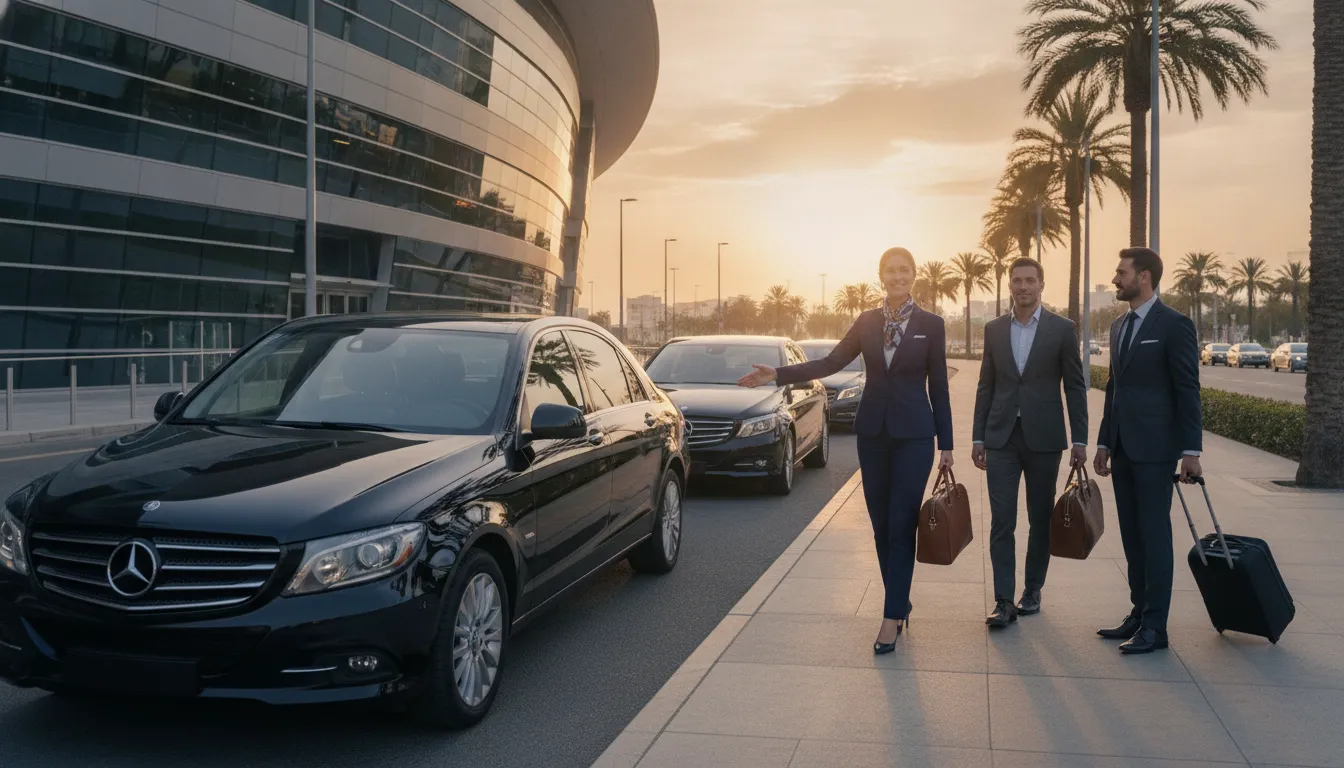
The event experience should feel effortless for guests, even when the schedule behind it is moving quickly. During an event, premium event logistics services can provide a coordination layer across arrivals, transfers, venue access, hospitality timing, and group communication. The exact support depends on the event, group size, destination, package, and services selected, so planners should confirm the scope before guests travel.
Keeping arrivals, transfers, and schedules aligned
On-site coordination may begin when guests arrive at the airport, hotel, or designated meeting point. A coordinator can help the group follow the planned transfer schedule, clarify meeting instructions, and keep transportation aligned with event access times. If a guest arrives separately or a schedule changes. The team may adjust the itinerary and communicate the update so the rest of the group is not left guessing.
That attention to timing matters when a day includes several connected moments, such as hotel departure, hospitality access, a venue entry window, and a post-event dinner. Concierge support may help with practical requests around those arrangements, while the planner retains a clear point of contact instead of managing multiple providers during the experience.
Supporting venue access and hospitality moments
Event-day support can also help guests understand where to go, when to meet, and how planned hospitality fits around the main event. For example, a group attending the Miami Grand Prix with tiered hospitality and on-trip support may need a carefully coordinated transition between lodging, transportation, hospitality areas, and the venue schedule. Access credentials, meeting points, and hospitality details should always be confirmed for the specific event and package rather than assumed.
For a corporate group, consider twelve clients arriving at a hotel before an evening event. One guest is delayed, another needs a different transfer time, and the group has a fixed hospitality reservation. An on-site coordinator could confirm the revised arrival plan, keep the main group moving, communicate the adjustment to the relevant providers. And help the planner stay focused on welcoming clients rather than troubleshooting every detail personally.
Making real-time adjustments with clear boundaries
Depending on the engagement, support may include physical team presence for a large group, real-time problem-solving, itinerary adjustments, concierge assistance, or availability during the event period. These are possible service arrangements, not universal guarantees of 24/7 coverage. Confirm response times, escalation contacts, operating hours, and included services during planning.
It is also important to define the role accurately. Travel and event logistics coordination can organize transportation, access, hospitality, and guest communication. It should not be presented as licensed security, protective services, emergency response, or a guarantee of personal safety. Those needs belong with appropriately qualified providers and venue or public safety teams.
How Post-Event Coordination Improves the Next Experience
The event may end when guests leave the venue, but the planning relationship does not have to end there. A thoughtful post-event process gives corporate planners a structured way to understand what worked, identify friction, and preserve the details that made the experience feel personal.
That process can begin with a short feedback request for the planner and, where appropriate, selected guests. The goal is not simply to collect compliments. Useful feedback reveals whether the timing felt comfortable, whether transportation and hospitality arrangements matched expectations, and which moments created the most value for the group. Superior Executive Services may also hold a debrief to review the original plan against what actually happened, including any itinerary adjustments or on-site issues that required attention.
Turn preferences into practical planning knowledge
Feedback becomes more valuable when it is documented in a way that can guide future decisions. A guest may prefer a particular hotel style, room arrangement, transfer format, arrival pace, hospitality setting, or level of concierge support. Recording those preferences helps reduce repeated questions and gives the next planning conversation a more informed starting point. Exact services still depend on the event, destination, group, and selected package, but the planning becomes more personal over time.
For companies that host recurring client entertainment, employee rewards, leadership experiences, or team celebrations, this continuity can support stronger relationships with both guests and internal stakeholders. It does not guarantee repeat business or a particular business outcome. It simply creates a clearer record of what the organization values and how its guests prefer to experience major events.
Questions worth asking after the event
- Which part of the experience felt most valuable to guests?
- Where did timing, communication, access, or transportation create friction?
- Were the hotel, hospitality, and itinerary choices appropriate for this group?
- Which guest preferences should be documented for a future event?
- What should be repeated, refined, or reconsidered next time?
These answers give event logistics services a stronger foundation for the next engagement. Instead of starting from a blank page. The planner and service team can build on a shared understanding of the group’s expectations while keeping the experience tailored to the next event.
Which Corporate Events Benefit Most From Premium Logistics?
Premium logistics are most valuable when an event carries relationship, recognition, or cultural importance, and the details cannot be left to guests to solve on their own. The right support begins well before departure, continues through arrivals and event access, and creates a clear record of what worked afterward. That lifecycle matters whether the group is hosting clients, rewarding employees, bringing leaders together, or celebrating a shared achievement.
Client entertainment and relationship-building
Client entertainment often involves guests with different schedules, preferences, and expectations. A logistics partner can help coordinate the practical framework around the experience, including accommodations, ground transportation, event access, hospitality timing, and communication. The goal is not to make every group identical. It is to make the experience feel considered, so hosts can focus on conversation and relationships instead of tracking arrivals, transfers, or last-minute itinerary changes.
For groups evaluating the timing and sequence of a sports experience, the VIP sports travel planning timeline provides useful context. Exact access, lodging, and transportation arrangements depend on the event, group size, destination, and selected services.
Employee rewards and leadership experiences
Recognition trips and leadership experiences benefit from a deliberate guest journey. Before the event, planners can align rooming needs, travel documents, transfers, credentials, and hospitality details with the purpose of the program. During the event, a designated coordination layer can help groups stay on schedule and respond when plans need to change. Afterward, feedback and documented preferences can improve future recognition programs, particularly when the company hosts more than one event each year.
This approach is also useful when executives need an experience that feels personal without creating a second full-time planning role inside the company. For the broader travel framework, see this guide to corporate event travel planning. It should complement, not replace, a discussion of the specific event and the responsibilities each provider will handle.
Team celebrations and major sporting or entertainment events
Team celebrations can involve a wide range of guests, from colleagues traveling together to clients and employees sharing one program. Premium coordination is especially helpful when the event is high demand, the destination is unfamiliar, or the itinerary combines several moving parts. A major race, golf tournament, music festival, or entertainment event may require careful sequencing between hotel arrival, transfers, access windows, hospitality, and departure. On-site support may include coordinators, concierge assistance, and real-time adjustments, depending on the engagement.
Event examples can make the scope easier to evaluate. The F1 Miami Grand Prix experience illustrates how event hospitality and on-trip support may be structured, while the Masters travel and hospitality planning page provides another event-specific reference. These examples are not universal package definitions. The most useful planning conversation starts with the event, guest profile, desired outcomes, timing, and the before, during, and after responsibilities that need to be coordinated.
Request an event logistics planning conversation for your group
Frequently Asked Questions
What does event logistics include?
For corporate event travel, logistics can include coordinating accommodations, ground transportation, event credentials or passes, tickets, hospitality access, schedules, and guest details. The exact scope depends on the event, destination, group size, package tier, and services selected, so confirm inclusions before approving a plan.
What are some examples of event logistics?
Examples include arranging hotel stays, aligning shared or private transfers with arrival times, coordinating premium event access. Supporting hospitality plans, and connecting the moving parts across hotels, transportation providers, venues, and event partners. During the event, the service may also include concierge support, itinerary adjustments, and on-site coordination for larger groups.
How far in advance should I plan event logistics?
Begin planning six to 12 months before a major event when your group needs customized arrangements or premium availability. Earlier planning gives your team more time to align guest preferences, accommodations, transportation, access, and hospitality. A shorter timeline may be workable, but availability and customization can be more limited.
How does a logistics provider improve efficiency?
A dedicated provider gives the planning team one coordination layer across travel, access, hospitality, timing, and vendors. That reduces the number of details your internal team must manage separately and gives guests a clearer experience. While allowing your team to stay focused on client relationships, employee recognition, or the event itself.
What if there is a last-minute issue with the event plan?
The response should be based on the specific engagement, but a logistics partner may help adjust itineraries, coordinate with providers, identify available alternatives, and support guests on site. Ask in advance how communication, contingency planning, and event-period support will work. Logistics coordination does not replace licensed security or protective services.
Plan Your Event Logistics With Less Friction
A thoughtful logistics plan can help your guests stay focused on the event, the experience, and the relationships that matter. Superior Executive Services can help you discuss the details that shape your group, including access, travel, hospitality, timing, and on-site coordination.