A luxury yacht can create a memorable setting for client entertainment, but the vessel itself is only one part of the decision. The stronger question is what the experience should help your team accomplish. A client appreciation gathering, a relationship-building evening, and a major-deal meeting each call for a different balance of conversation, privacy, movement, dining, and schedule control.
Choosing a luxury yacht for client entertainment starts with the business objective, guest profile, and event-day requirements. Work backward from those priorities to the vessel, itinerary, onboard experience, and contingency plan.
That approach keeps the selection process focused on guest experience and execution rather than surface-level impressions. Senior leaders may balance several priorities: making valued clients feel welcomed, protecting the host team’s reputation, and reducing the planning burden across transportation, access, timing, and special requests. Those details deserve attention well before invitations are finalized, especially for a complex corporate event. Clear priorities also make later conversations with yacht operators more productive and easier to evaluate.
Superior Executive Services acts as an experience curator and coordination partner. The team helps align the event concept with the practical questions that must be confirmed with the appropriate operators and providers. The first step is to define what a successful client interaction should achieve and how the yacht supports that purpose.
Request a consultation for your client-entertainment experience
How Planning a Luxury Yacht for Client Entertainment Starts With the Objective
The right yacht experience begins with the business reason for bringing clients aboard. A polished setting can support relationship development, a major deal, an advisory meeting, or a carefully considered appreciation event, but each objective calls for a different guest experience. Define the intended outcome before comparing vessels, routes, or onboard features.
Start with the relationship you want to strengthen
Identify the clients or prospects attending and the role the event should play in the relationship. Is the priority thanking long-standing partners, creating time for strategic conversation, supporting a sales opportunity, or giving senior leaders an informal setting to connect? The answer shapes the appropriate pace, level of formality, hosting style, and amount of structured programming.
Then name the decision-makers involved. CEOs, presidents, executive vice presidents of sales, and chief revenue officers may each evaluate the event differently. A revenue leader may focus on relationship impact and follow-up opportunities, while an executive host may prioritize discretion, ease, and the impression created for valued guests. Align those expectations before planning begins.
Build a useful guest profile
Go beyond a headcount. Note each guest’s seniority, professional relationship to the host, dietary needs, mobility considerations, preferred level of activity, and comfort with time on the water. Consider whether the group needs quiet areas for conversation, a formal meal, informal networking, or a balance of hosted moments and personal space. This profile gives the planning team practical criteria for evaluating the vessel and event flow.
Match the event to the calendar and setting
Connect the yacht program to the wider itinerary. It may complement a major event, serve as a standalone client gathering, or provide a distinctive setting around a supported destination such as Monaco during the Grand Prix. Establish the date, arrival window, departure point, desired duration, and any fixed commitments before discussing the route. Corporate buyers typically plan major events six to twelve months ahead, so early definition creates more room to assess options and manage dependencies. Corporate event hospitality planning can help organize those wider considerations.
Define success in observable terms
Choose two or three measures that reflect the original objective. These might include meaningful conversations with priority clients, attendance from specific stakeholders, follow-up meetings, stronger executive relationships, or a smooth experience that protects the host’s reputation. Also document what would make the event unsuccessful, such as an overpacked schedule, insufficient conversation space, or unclear responsibilities. With a defined objective, guest profile, timeline, and success criteria, a luxury yacht for client entertainment becomes a strategic choice rather than an attractive setting selected in isolation.
How to Choose a Luxury Yacht for Client Entertainment
The right vessel should support the relationship you want to build, not compete with it. Begin by matching the yacht’s overall environment to the guest profile and purpose of the gathering. A vessel suited to a relaxed client appreciation outing may not provide the same flow as one needed for private conversations, a leadership discussion, or a carefully timed hospitality program.
Evaluate the experience through five lenses: access quality, service excellence, flexibility, risk mitigation, and value perception. These are the criteria corporate buyers use when assessing premium experiences, and they help separate an attractive vessel from a practical choice. Ask what the operator can confirm in writing, then consider how the answer affects your guests and your team’s workload.
| Criterion | Questions to confirm |
|---|---|
| Layout and privacy | Are there distinct areas for conversation, dining, hosting, and quiet time? Can private discussions happen without disrupting the wider group? |
| Guest capacity | What is the confirmed capacity for your planned format, not simply the vessel’s maximum? Does the layout remain comfortable when guests, crew, dining, and service equipment are included? |
| Boarding and access | Where will guests board, how long will transfers take, and what assistance is available for guests with mobility or accessibility needs? |
| Route and flexibility | What route best supports the event objective? Which itinerary modifications are possible if timing, guest preferences, or operating conditions change? |
| Service and value | What service level, catering approach, and support structure are confirmed? Does the experience justify the time, coordination, and reputation exposure involved? |
Capacity deserves particular care. A guest list is not just a headcount. Consider whether senior guests will need comfortable seating, whether the program includes a hosted meal or presentation, and whether people will naturally divide into smaller conversations. Confirm the usable arrangement for your specific event rather than relying on a headline capacity.
Boarding is another decisive part of the experience. A difficult meeting point, unclear transfer sequence, or limited accessibility can undermine an otherwise polished plan before guests step aboard. Confirm the embarkation location, arrival window, transport connection, luggage expectations, and assistance process early. This is where a coordination partner can reduce friction across transportation, credentials, and event-day timing.
Finally, judge value by the quality of the complete experience, not the vessel alone. SES can tailor planning around client-entertainment objectives, group preferences, special requests, and itinerary modifications. Super yacht hospitality is one supported option associated with the Monaco Grand Prix. But the vessel and route should always be selected against your specific guest experience and operating requirements. A well-chosen yacht gives your team room to host naturally while keeping the logistics deliberate, discreet, and manageable.
What Should a Client Entertainment Yacht Experience Include?
A polished onboard program should help guests connect, keep the host prepared, and support the gathering’s purpose. Every yacht and operator differs, so treat the following as a confirmation checklist, not a list of guaranteed inclusions.
Catering and service rhythm
Ask how the operator can structure food and beverage service around your guest list and itinerary. Options may include a seated meal, buffet service, circulating cocktail food, or food stations, depending on the vessel, crew, galley, and event plan. These formats are commonly discussed in corporate yacht planning, but they should be confirmed for the specific charter. Review common corporate dining formats as a starting point, then clarify menus, dietary requirements, timing, replenishment, and who manages service transitions.
Ask whether service is designed for conversation or a formal program, and how clearing and replenishment will fit the schedule.
Entertainment, connectivity, and meeting space
Entertainment should fit the relationship you are building. Confirm what is actually available, whether it can be scheduled around conversation, and whether the operator can support a hosted activity, music, presentation, or other special request. Some yacht entertainment systems are designed around charter guests and may include internet or other connectivity solutions, but equipment, bandwidth, compatibility, and crew support vary by vessel. If guests need to join a call or share content, confirm compatibility in advance. See examples of yacht connectivity and entertainment systems for questions to raise with the operator.
If business discussion is part of the objective, confirm whether there is a suitable meeting space, usable power, dependable connectivity, and enough acoustic separation for the group. A host briefing before boarding can cover the run of show, guest preferences, introductions, dietary notes, technology, and the point person for decisions. That preparation helps the experience feel effortless without promising that every request can be accommodated.
Personalization and special requests
Special requests should be discussed early, including menu adaptations, accessibility needs, preferred entertainment, branded touches, itinerary preferences, and timing constraints. SES customizes experiences around client entertainment objectives, group preferences, special requests, and itinerary modifications, with super yacht hospitality identified as an option associated with the Monaco Grand Prix. For broader context, explore this guide to VIP travel and corporate hospitality. The right planning partner will document what is requested, confirm what the operator can deliver, and keep the host informed before the guest list arrives.
How Do Privacy, Security, and Guest Comfort Work Onboard?
A polished onboard experience depends on more than the vessel’s appearance. Before confirming a luxury yacht for client entertainment, establish what confidentiality means for your group and which procedures the operator can actually support. Ask who may board, how guest names are collected, whether vendors or photographers will be present, and how private conversations are handled. Avoid treating privacy as an automatic feature. It should be discussed as an expectation, documented where appropriate, and confirmed with the operator.
The same discipline applies to security. Request the operator’s access procedures, communication plan, emergency response process, and insurance documentation. If the guest list includes high-profile individuals, sensitive business discussions, or unusual movement requirements, involve appropriately licensed security and transportation providers before the event. Confirm each provider’s credentials, scope, and responsibilities rather than assuming that a yacht booking includes security services. A planning partner can help coordinate these questions, but the operator and relevant specialists must confirm what they provide.
Build comfort into the operating plan
Guest comfort is practical planning, not simply an aesthetic choice. Review boarding points, walking distances, stairs, restrooms, seating, shade, climate conditions, and the route from ground transportation to the vessel. Ask how the crew can support guests with mobility, sensory, dietary, or medical considerations. Accessibility arrangements can vary by vessel and location, so confirm the details in advance and communicate them discreetly to the appropriate team.
Plan communications before guests arrive. Identify one primary event contact, a backup contact, and the channels used for weather updates, boarding changes, and urgent instructions. Give hosts a concise briefing on access, meeting points, guest sensitivities, and escalation procedures. Written plans help reduce confusion without suggesting that every risk can be eliminated.
Prepare and explain personal flotation devices
Safety equipment should be confirmed with the operator as part of the pre-event review. The U.S. Coast Guard states that a recreational vessel must have a U.S. Coast Guard Approved Wearable PFD for each person onboard. It also notes that adult-sized life jackets may not work for children, and that child-sized options are available. Requirements can vary by jurisdiction, so ask the operator which equipment applies to the vessel, route, and guest group.
Fit matters. The Coast Guard explains that a correctly worn foam-filled life jacket should fit snugly and stay below the wearer’s chin or ears. Equipment should be maintained according to its type and manufacturer instructions, with worn, faded, waterlogged, or damaged devices removed from service. Review the operator’s inspection and briefing procedures, and make sure guests know when and how PFDs are prepared for use. These checks support a more comfortable experience because expectations are clear, while leaving operational safety decisions with the licensed operator and relevant authorities.
Review U.S. Coast Guard life-jacket guidance and request written confirmation of the operator’s procedures before finalizing the itinerary.
How Should You Plan Transfers, Boarding, and Event-Day Flow?
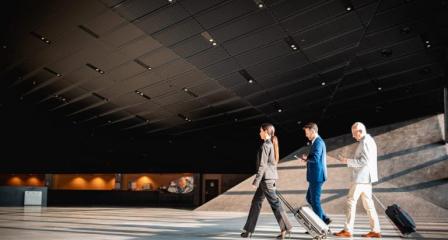
A polished yacht experience depends on what happens before guests ever reach the dock. The objective is to make every handoff clear, discreet, and easy to follow, while preserving enough flexibility for executive schedules and changing event conditions. Treat the movement plan as part of the hospitality design, not as a separate transportation task.
- Build the guest and requirements brief. Confirm the final guest list, arrival times, mobility or dietary considerations, preferred communication method, and any special requests. Record who needs a hotel transfer, who is arriving independently, and who should be greeted personally. SES coordinates accommodations, transportation, credentials, travel documents, event tickets, and access passes as part of pre-event planning. Consolidate these details rather than scattering them across email threads.
- Map every transfer and credential checkpoint. Work backward from the boarding window and identify the hotel departure time, vehicle staging point, dock entrance, credential collection, and route to the vessel. Provide guests with one concise itinerary that includes the right contact name, meeting location, and what they need to carry. Transportation should be arranged through licensed providers with insurance coverage, with established local service companies used where appropriate. Confirm access requirements with the operator and event organizers instead of assuming a ticket or pass covers every area.
- Run a pre-boarding confirmation. Reconfirm weather-sensitive timing, passenger details, documents, access passes, dietary notes, and the preferred boarding sequence. Give the host a short briefing covering introductions, meeting points, and the escalation contact. If a guest is delayed, state whether the group waits, boards on schedule, or uses a designated handoff. Avoid last-minute improvisation at the dock, where uncertainties become visible to clients.
- Manage the event-day handoff. A dedicated coordinator can meet guests at the location, check credentials, guide the transfer, and communicate with the vessel team. Once aboard, the coordinator should confirm that every guest has been welcomed, direct luggage appropriately, and make introductions without interrupting the host’s relationship-building time. For a Monaco event, the broader premium event access and logistics plan should align yacht movement with the hospitality schedule.
- Keep support active through departure. The coordinator should monitor return transfers, guest changes, timing adjustments, and communication with suppliers throughout the event period. SES identifies dedicated on-site coordinators for large groups, 24/7 event-period availability, and real-time problem-solving as part of its operating model. That support does not remove the need for operator procedures, but it gives the host a clear channel when a transfer, credential, or guest handoff needs attention.
Test the plan from a guest’s perspective. If someone can understand where to go, whom to contact, and what happens next without asking the host, the logistics are doing their job.
What Is the Best Weather and Contingency Plan?
A polished yacht experience depends on decisions made before conditions change. Weather planning should therefore be written into the event brief, reviewed with the yacht operator and relevant providers, and communicated to the host team before guests arrive. Avoid relying on informal assumptions such as a particular wind level or forecast window. The operator is responsible for confirming what conditions affect boarding, departure, routing, or time on the water, and which alternatives are practical for the selected vessel and destination.
Begin by defining the decision points. The written plan should identify when the forecast is reviewed, who provides the operational update, how far in advance a route or activity may be changed, and who has authority to make the final call. It should also distinguish between a minor itinerary adjustment and a decision to replace the yacht experience entirely. These triggers must be confirmed with the operator and relevant providers, since vessel capability, local requirements, port conditions, and provider availability differ.
Build alternatives that protect the guest experience
A contingency is more useful when it preserves the purpose of the event rather than simply replacing one booking. Ask whether the itinerary can be shortened, delayed, rerouted, or adapted to use sheltered locations. Confirm suitable shoreside hospitality, private dining, meeting space, or another curated activity if time on the water is not advisable. Itinerary modifications can be part of a customized experience, but every option must be checked for access, transportation, guest comfort, operating hours, and availability.
Alternative suppliers matter as much as the backup concept. Document secondary transportation, catering, hospitality, and activity providers, along with the person responsible for confirming them. SES contingency practices include backup options, alternative suppliers, and real-time executive-level problem-solving. That coordination can reduce the host’s burden, but it does not replace confirmation from the operator or the providers delivering each part of the revised plan.
Make communication and authority explicit
Use multiple communication channels rather than depending on a single phone number or messaging thread. The plan may include a primary group message, direct calls for decision-makers, and an on-site contact who can relay updates to guests discreetly. Set a communication schedule for the planning team and a separate approach for guests, so uncertainty is not amplified by premature or conflicting messages.
Assign one executive decision-maker, establish a named operational counterpart, and record the escalation path. This is especially important when clients are traveling from different locations or the schedule connects with another event. For an international program, managed VIP guest arrangements may require the same disciplined coordination across transfers, hospitality, and timing. The finished plan should be approved by the relevant operator and providers, then shared with the host team in a concise format before event day.
Discuss your client-entertainment yacht plan with Superior Executive Services
Frequently Asked Questions
How should we think about the cost of a luxury yacht for client entertainment?
Start with the experience requirements rather than a headline charter figure. The final scope can depend on the vessel, date, destination, operating time, guest count, catering, transportation, entertainment, staffing, and contingency needs. Ask for a written proposal that separates vessel-related charges from planning, hospitality, transfers, and optional enhancements. That makes the investment easier to compare against the relationship, hosting, and access objectives the event is intended to support.
What is the 12-person rule on a yacht?
The phrase usually refers to a commonly discussed guest-count threshold, but it should not be treated as a universal rule for every vessel or destination. Confirm the permitted guest count, operating category, itinerary, and any local requirements directly with the yacht operator and relevant specialists. Provide the complete guest list early, including children and staff, so the proposed vessel and onboard arrangements can be checked before contracts are finalized.
How do we choose the right vessel for a client event?
Match the vessel to the purpose of the gathering, not simply its appearance. Review usable guest areas, conversation flow, boarding access, indoor and outdoor spaces, meeting privacy, route flexibility, catering capability, and weather alternatives. A vessel that photographs beautifully may still be a poor fit if guests cannot move comfortably or the format does not support meaningful conversation. An experience curator can help translate your objectives and group preferences into questions for the operator.
What should be included in the onboard experience?
Confirm every element in writing, including welcome service, meal or cocktail format, beverages, dietary accommodations, entertainment, connectivity, meeting equipment, crew responsibilities, transfers, and host support. These are planning decisions, not automatic inclusions. SES can coordinate special requests and itinerary modifications around the client experience, while the operator confirms what the selected vessel can actually provide.
What happens if the weather changes?
Agree on decision points, communication channels, indoor or shore-based alternatives, and who has authority to modify the itinerary before event day. Weather planning may involve an adjusted route, revised timing, alternative suppliers, or a different hospitality format. SES builds contingency options and real-time coordination into event planning, but operating decisions remain subject to the yacht operator and applicable local conditions.
Contact Us to Plan a Curated Client Experience
A thoughtful consultation can help connect the yacht experience to the relationship you want to build, while keeping guest comfort, access, and event-day logistics in view. Superior Executive Services acts as a coordination and experience-curation partner, helping shape the broader plan rather than presenting itself as a vessel owner or broker.
For an initial conversation, bring your guest list or estimated group profile, preferred destination or event, timing, entertainment objective, access requirements, and any transportation or scheduling considerations. These details provide a practical starting point for discussing the right experience and the questions to confirm with operators and providers.