
Corporate Office Security: A Guide to Protecting Your HQ
A headquarters is more than a workplace. It is where employees, visitors, sensitive information, and business-critical operations converge. Multiple entrances, departments, and schedules can create avoidable exposure when access, visibility, and response procedures are managed in isolation.
Contact Superior Executive Services about your next corporate experience
Corporate office security is a coordinated program that protects people, property, and operations through access control, visitor management, trained personnel, surveillance, and emergency planning. Superior Executive Services brings a discreet, high-touch planning mindset to executive and corporate experiences. The program should support normal business while reducing opportunities for unauthorized access and improving readiness when conditions change.
The right approach begins with understanding the facility, its people, and the risks that change throughout the day. From the first credentialed entry to the response plan behind it, each layer should work as part of one thoughtful system. This guide focuses on practical decisions for security directors, facility managers, and executive teams.
What Is Corporate Office Security, and Why Does Your HQ Need It?
Corporate office security is the coordinated program used to protect people, facilities, information, and operations at a headquarters or workplace. It is broader than a locked front door or a camera system. A mature program connects access control, visitor procedures, trained personnel, monitoring, incident response, and business continuity to the way your organization actually works.
That distinction matters because an HQ is more than a collection of offices. It may contain executive suites, confidential records, intellectual property, technical infrastructure, employee workspaces, loading areas, and meeting rooms used by visitors and clients. Each space has a different risk profile. Organizations protecting principals across home, office, and travel can also review residential security planning as a related planning context.
A practical plan gives people appropriate access, identifies unusual activity early, and establishes clear actions when a concern arises.
Protecting people, assets, and sensitive information
The first responsibility is safeguarding employees, executives, contractors, and visitors. The program should also account for physical assets and sensitive data. Physical and digital risks increasingly overlap when cameras, alarms, and access systems connect to company networks, so facility managers and technology leaders should understand where responsibilities meet.
Access controls and visitor management help limit unauthorized movement, while trained security officers and surveillance can provide visible deterrence, timely awareness, and useful incident evidence. These measures should support the workplace experience, not create unnecessary friction. The best approach is discreet, consistent, and matched to the organization’s risk tolerance.
Supporting continuity in a changing workplace
Hybrid work has made occupancy less predictable. Security protocols may need to adapt to changing schedules, lower-occupancy days, shared spaces, and events that bring a larger number of people into the building. A program designed only for a fixed nine-to-five pattern can leave gaps during evenings, weekends, executive meetings, or temporary changes in operations. The same planning discipline that secures day-to-day HQ life should extend to high-profile gatherings, where corporate event security and hospitality must stay coordinated with the facility’s core controls.
For organizations that host clients or leadership gatherings, Superior Executive Services brings the same emphasis on discreet coordination and polished guest experience to concierge travel services. That related planning is not a substitute for a facility security program, but it can support the broader experience when business travel and hosted events intersect. Teams arranging executive trips can also review business travel security planning as a related consideration.
For that reason, corporate office security should be managed as a lifecycle rather than a one-time installation. The Interagency Security Committee’s Facility Security Plan Guide describes a uniform approach to developing facility security plans. Its lifecycle model includes planning, implementation, and regular updates as risks change. That same discipline applies to commercial headquarters: assess the environment, establish priorities, put safeguards in place, test the response, and refine the plan.
A dedicated security program gives executives and facility leaders a shared operating framework. It clarifies who owns decisions and how concerns are reported. It also helps the organization continue functioning when conditions change. The result is a more prepared and resilient workplace.
For organizations that value discreet, high-touch planning, Superior Executive Services offers a relevant model through its executive-led approach. Each organization remains responsible for selecting security measures suited to its own facility.
Core Components of a Modern Corporate Security Program
Effective corporate office security is not a single product or post at the front desk. It is a coordinated set of controls. Those controls manage who enters, what happens inside the facility, how activity is observed, and how the organization responds when conditions change. Each layer should have a defined purpose, an accountable owner, and a clear connection to the others.
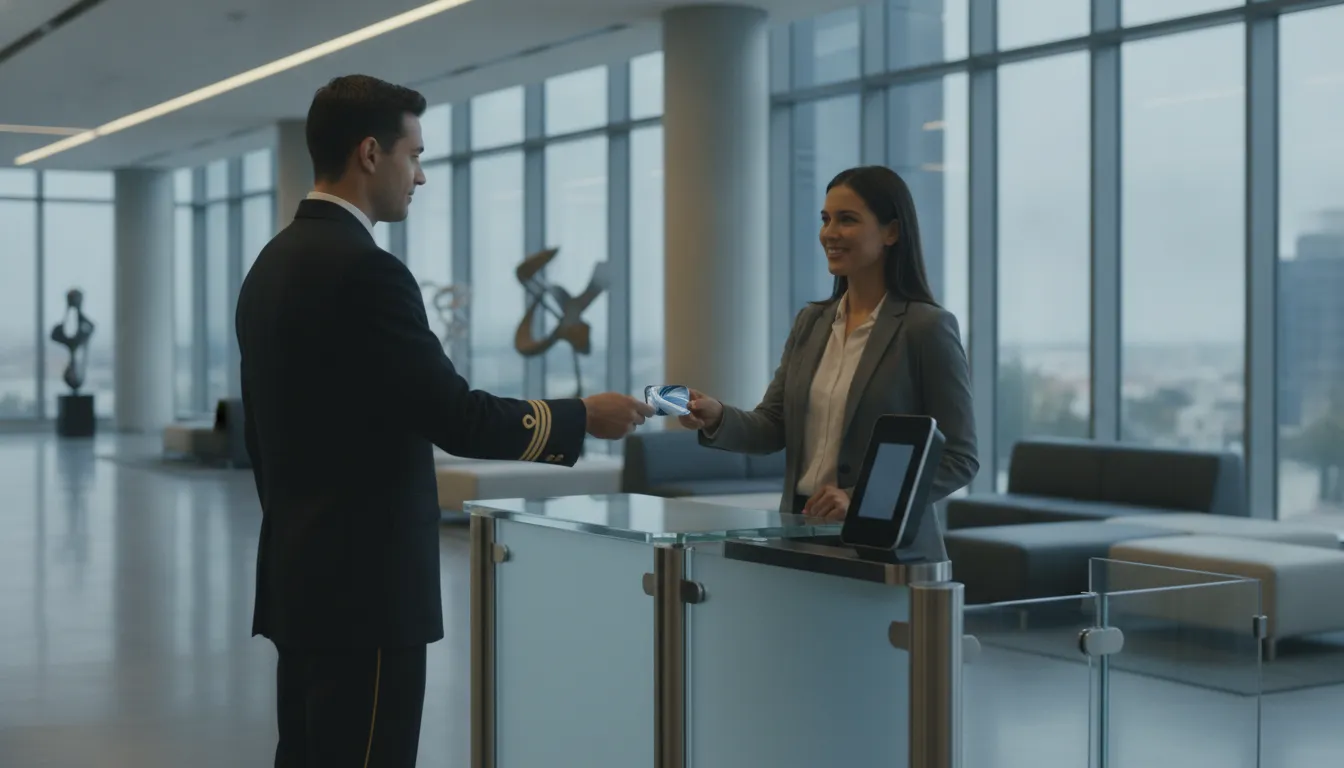
Access control establishes the first boundary. Credentials, identification requirements, controlled doors, and permissions help prevent unauthorized individuals from entering facility spaces, as outlined in the CISA facility access control guidance. Visitor management extends that discipline to guests, vendors, and contractors through registration, temporary badges, host confirmation, and controlled movement through secure areas.
Human presence remains important even in highly automated environments. On-site security officers provide a visible deterrent and can respond immediately to suspicious activity, access concerns, or an emerging emergency. Their value is greatest when their post orders, escalation procedures, and communication channels are aligned with the facility’s wider security plan.
Video surveillance adds continuous visibility across entrances, reception areas, parking, elevators, and other sensitive zones. Properly configured systems support real-time monitoring and can preserve evidence after a security breach. Surveillance should support decision-making, not simply collect footage. Retention rules, camera coverage, privacy expectations, and access to recordings should be documented in advance.
Finally, emergency response planning connects everyday controls to decisive action. The plan should define notification paths, evacuation responsibilities, shelter or lockdown procedures, reunification considerations, and coordination with emergency services. It should also address the physical protection of sensitive data and business assets, because modern corporate security must account for both physical environments and information systems.
| Layer | Purpose | Primary function | Who it protects |
|---|---|---|---|
| Access control | Limit unauthorized entry | Verify credentials and manage permissions | Employees, visitors, assets |
| Visitor management | Control non-employee access | Register guests, issue badges, track visits | Employees, guests, restricted areas |
| Security officers | Deter and address threats | Monitor conditions and respond in person | People, property, operations |
| Video surveillance | Increase visibility | Monitor activity and preserve evidence | People, facilities, investigations |
| Emergency response | Reduce harm during crises | Coordinate alerts, evacuation, and recovery | Employees, visitors, continuity |
The strongest program treats these layers as one operating system. An access alert can prompt a camera review and officer response, while visitor records can help account for people during an evacuation. That integration makes the program more practical, measurable, and resilient than any isolated security measure.
How to Build a Layered Facility Access Control Strategy
Effective access control is not a single lock, reader, or receptionist. It is a sequence of decisions that determines who may approach a facility, enter it, move through it, and receive materials inside it. CISA identifies access control measures as essential to preventing unauthorized individuals from entering facility spaces, while entry points serve as the first layer of a broader protection strategy.
-
Map every entry point and assign a security purpose
Start with the main lobby, employee entrances, parking-garage doors, stairwells, executive areas, server rooms, and other transitions between public and restricted space. Classify each point by traffic, operating hours, sensitivity, and consequence if compromised. Then define the control at each location: a staffed reception point, locked door, card reader, turnstile, intercom, or monitored gate. Do not overlook side doors that are rarely used. They often become informal access routes when normal procedures are inconvenient.
-
Match credentials to the risk of each zone
Use a credential hierarchy rather than giving every employee identical access. Smart cards can support role-based permissions, time windows, and rapid deactivation when someone changes roles or leaves the organization. Biometric controls may add assurance in especially sensitive areas, but they should be selected with privacy, accessibility, and business continuity requirements in mind. Modern access control has evolved from manual keys toward biometrics and encrypted cards, but technology is only effective when permissions are reviewed and exceptions are documented.
- Limit access by role, location, and schedule.
- Require prompt badge recovery and credential deactivation.
- Maintain a controlled process for lost badges, contractors, and temporary access.
-
Control visitors from registration through departure
Visitor management should begin before arrival when practical. Confirm the host, purpose, expected duration, and areas the guest needs to enter. At reception, register the visitor, verify identification according to company policy, issue a temporary badge, and explain escort requirements. The badge should visibly distinguish guests from employees without exposing unnecessary personal information. Visitor management systems can help ensure that only authorized guests reach secure areas while creating a record of non-employee access. Require badge return or electronic checkout when the visit ends.
-
Separate deliveries from employee and visitor traffic
Loading docks and delivery areas are frequently overlooked, yet they can create an access route into the facility. Establish designated delivery windows, verify drivers and vendors, inspect or document packages according to risk, and keep dock doors closed when not actively in use. Use barriers, cameras, lighting, or a security officer where the volume or sensitivity of deliveries warrants it. Route couriers away from executive and employee circulation whenever possible, and define who may authorize an unexpected shipment or service visit.
-
Plan for remote monitoring and after-hours access
Not every visit requires a person at the door. Configure after-hours access policies, remote release for scheduled vendors, and monitored entry for low-traffic periods. Ensure cameras and access events are reviewed during those hours and that a clear escalation path exists for an unexpected visitor. Remote monitoring extends the same control and accountability to hours when the reception point is not staffed.
Finally, test the strategy in normal operations and under stress. Walk the route as an employee, visitor, contractor, and delivery driver. Look for doors propped open, badges that grant excessive access, and handoffs that depend on memory. A layered design should remain discreet and convenient for authorized users while making unauthorized movement difficult to accomplish unnoticed.
The Role of On-Site Security Officers and Video Surveillance in Office Protection
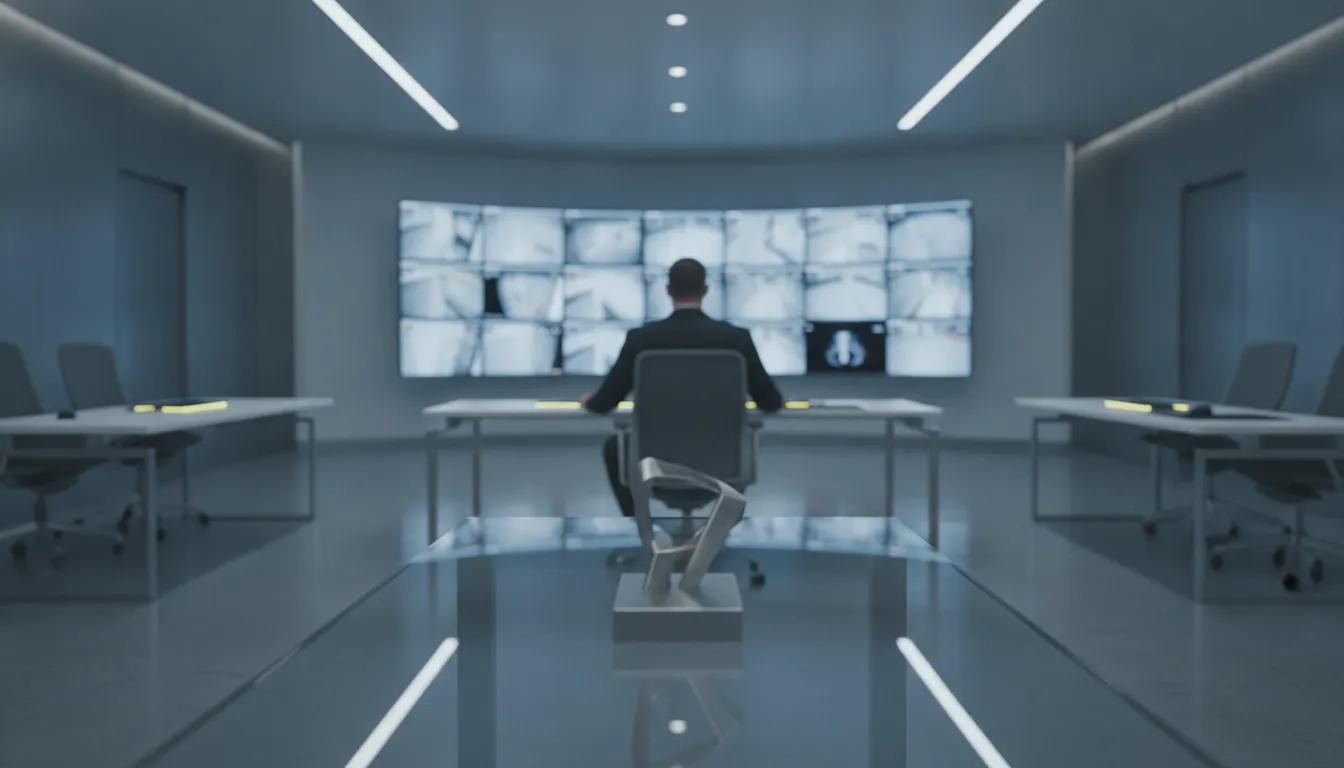
On-site security officers and video surveillance are most effective when they operate as one coordinated layer of protection. Cameras extend visibility across entrances, corridors, parking areas, and other sensitive spaces. Officers add judgment, communication, and immediate action when an alert or unusual activity requires a human response.
Visible presence, faster response
A uniformed officer at a reception area, entrance, or perimeter point provides a visible deterrent and establishes a clear point of contact for employees, visitors, and vendors. That presence can discourage opportunistic intrusion while helping staff address concerns before they become larger incidents. Officers can verify credentials, manage unexpected visitors, coordinate with building management, and respond swiftly to alarms or disturbances. They should also be trained in de-escalation, allowing them to manage difficult interactions calmly and proportionately whenever physical intervention is not necessary. Professional security personnel can therefore support both prevention and response.
Surveillance that supports decisions
Video surveillance provides real-time monitoring and can preserve evidence after a security breach. Coverage should be designed around risk, not simply the number of cameras installed. Review entrances, reception points, employee and visitor circulation routes, loading areas, parking facilities, and locations containing sensitive assets. Camera placement should reduce blind spots while respecting privacy and applicable workplace policies. Adequate lighting is equally important because well-lit perimeters and parking areas improve camera visibility and make it harder for unauthorized activity to go unnoticed. Surveillance systems are most useful when the images are clear enough to support identification, review, and follow-up.
Integrate and test the complete system
Connecting alarms to video feeds allows officers to verify threats faster and respond with better information. An alarm can direct attention to the relevant camera view, while recorded footage can help establish what happened and guide incident reporting. Integration should include access control, intrusion detection, intercoms, and other systems where appropriate. It also requires routine testing. Cameras, sensors, recording storage, notification paths, backup power, and monitoring procedures should be checked on a defined schedule. Regular maintenance and testing help ensure the technology performs during an actual emergency, rather than only during installation or demonstration.
Creating an Emergency Response Plan for Your Headquarters
An emergency response plan should give employees and leaders a clear sequence of actions before, during, and after a crisis. Start with a written assessment of credible scenarios for the headquarters, including fire, severe weather, medical emergencies, unauthorized entry, workplace violence, utility failure, and other events specific to the site. CISA describes facility security planning as an ongoing lifecycle of assessment, design, implementation, and maintenance, rather than a document that is filed away after approval. Review the facility security planning guidance when establishing ownership and review intervals.
Define evacuation, shelter, and accountability procedures
Map primary and alternate evacuation routes, accessible exits, fire doors, assembly areas, and shelter locations. Identify who checks each zone, who assists visitors or employees with access needs, and who reports headcounts to the incident lead. Run drills at planned intervals, vary the timing when practical, and document the results. A drill should test more than whether people can leave the building. It should reveal blocked routes, unclear instructions, delayed accountability, and gaps in communication. Update the plan after each exercise and whenever the layout, staffing, occupancy, or tenant mix changes.
Make workplace violence reporting direct and actionable
Employees need a trusted way to report threats, concerning behavior, harassment, suspicious activity, or unauthorized access without guessing whom to contact. Establish a primary reporting channel, an after-hours option, and an escalation path for imminent danger. OSHA recommends workplace violence prevention programs that address potential risks, employee training, and necessary security protocols. OSHA workplace violence guidance can help HR, facilities, and security align prevention responsibilities.
Coordinate the plan with local law enforcement, fire services, emergency medical providers, building management, and neighboring tenants where appropriate. Share site access details, emergency contacts, floor plans, staging areas, and procedures for handing over command. Keep those details controlled and current. Security officers and designated leaders should know when to call emergency services, preserve evidence, isolate an area, or move people away from danger. Training should emphasize calm communication and de-escalation rather than improvisation.
Connect emergency response to business continuity
Link life-safety procedures to disaster recovery and business continuity plans. Identify critical functions, alternate work locations, communication redundancies, essential records, and recovery priorities if the headquarters cannot reopen immediately. Disaster recovery should be integrated with facility security measures so operational resilience does not depend on a single building or system. For leadership teams that also travel or attend high-profile events, a coordinated plan should connect HQ protection with executive protection planning so coverage travels with the people it is designed to protect. Finally, use a defined risk management process to reassess threats, vulnerabilities, and consequences, then fund and prioritize corrective actions. This turns corporate office security from a static policy into a practiced capability that improves with every exercise, incident, and change in risk.
How to Measure and Improve Your Corporate Office Security
A corporate office security program should be managed as an ongoing risk process, not a one-time installation. As staffing, occupancy, technology, vendors, and business operations change, previously reasonable controls can develop gaps. A disciplined review cycle gives security and facilities leaders a practical way to identify those gaps, prioritize corrective action, and confirm that improvements work in daily operations.
Start with regular assessments and clear policies
Schedule security assessments and audits at defined intervals, as well as after meaningful changes such as an office expansion, a new access-control system, or a shift in work patterns. Review entry points, visitor procedures, restricted areas, lighting, camera coverage, alarm response, and emergency communications. The assessment should compare actual conditions with the organization’s risk priorities, rather than simply confirming that equipment is present.
Written policies turn those expectations into consistent behavior. A robust policy should explain acceptable use of facilities and security equipment, credential responsibilities, visitor handling, reporting channels, and escalation procedures. Keep policies accessible, assign ownership, and document when they are reviewed. Clear reporting protocols and a culture that encourages employees to raise concerns can help identify workplace-violence risks before they become incidents. OSHA guidance on workplace violence emphasizes both prevention programs and necessary security protocols.
Use training and incident data to find patterns
Employees are part of the security program. Training should cover suspicious behavior, tailgating, lost badges, uncomfortable interactions, emergency notifications, and how to report concerns without delay. Measure participation, completion, and understanding, but also test whether people can apply the guidance through scenario discussions or periodic exercises. Security officers should receive role-specific training, including de-escalation for difficult interactions.
Incident reports are another performance measure. Review more than serious breaches. Repeated propped doors, failed badges, unauthorized visitor attempts, alarm activations, near misses, and delayed responses can reveal recurring weaknesses. Track location, time, contributing conditions, response time, outcome, and corrective action. Then look for patterns and assign an owner and due date for each improvement. A follow-up review should confirm whether the change reduced recurrence.
Include cybersecurity in physical security reviews
Cameras, badge readers, alarms, intercoms, and building-management systems increasingly connect to company networks. Protect these systems with appropriate access controls, software and firmware maintenance, network segmentation, logging, and vendor-account reviews. Physical and cybersecurity teams should assess connected systems together so that a cyber intrusion cannot quietly undermine facility protections. Re-test cameras, sensors, alarms, and integrations after maintenance or configuration changes. Continuous improvement is strongest when assessments, training, incident analysis, policy updates, and technical testing inform one another.
Contact Superior Executive Services to discuss corporate event planning
Frequently Asked Questions
How can a company improve security in an office building?
Start with a risk assessment, then layer controlled entry, visitor registration, security officers, video surveillance, lighting, employee training, and documented response procedures. Superior Executive Services approaches executive-facing experiences with discreet coordination, while facility leaders should select security resources suited to their site. Test controls regularly and update them as occupancy, operations, or threats change.
What are the components of a comprehensive corporate office security program?
A comprehensive program combines access control, visitor management, trained on-site personnel, surveillance, emergency response planning, employee awareness, and periodic assessments. It should also define who receives alerts, who can authorize access, how incidents are documented, and how physical systems are protected when connected to company networks. Superior Executive Services is a luxury travel and hospitality company. So its relevant contribution here is a discreet planning perspective for executive-facing experiences, not a substitute for a facility security provider.
What is the best way to manage visitors in a corporate office?
Use a consistent process that verifies each guest, confirms the host, records arrival and departure, issues temporary identification, and limits access to approved areas. A visitor management system can support that process, but reception staff and security personnel still need clear escalation procedures for unexpected, unaccompanied, or restricted visitors. Keep the process discreet and easy for approved guests to follow.
What should be included in an office emergency response plan?
Include threat reporting procedures, evacuation routes, assembly locations, accountability methods, shelter or lockdown guidance where appropriate, emergency contacts, and coordination responsibilities. OSHA recommends workplace violence prevention programs that address potential risks, employee training, and necessary security protocols (OSHA guidance). Practice the plan through drills and review it after incidents or major facility changes. Keep the plan current, controlled, and accessible to the people responsible for response.
A focused review can help your leadership team align access control, visitor management, personnel, surveillance, and response planning with the realities of your headquarters and operations. Superior Executive Services can discuss priorities for an executive-facing hospitality and travel program. Your organization remains responsible for selecting facility security resources appropriate to its needs.
Contact Superior Executive Services about a tailored corporate experience